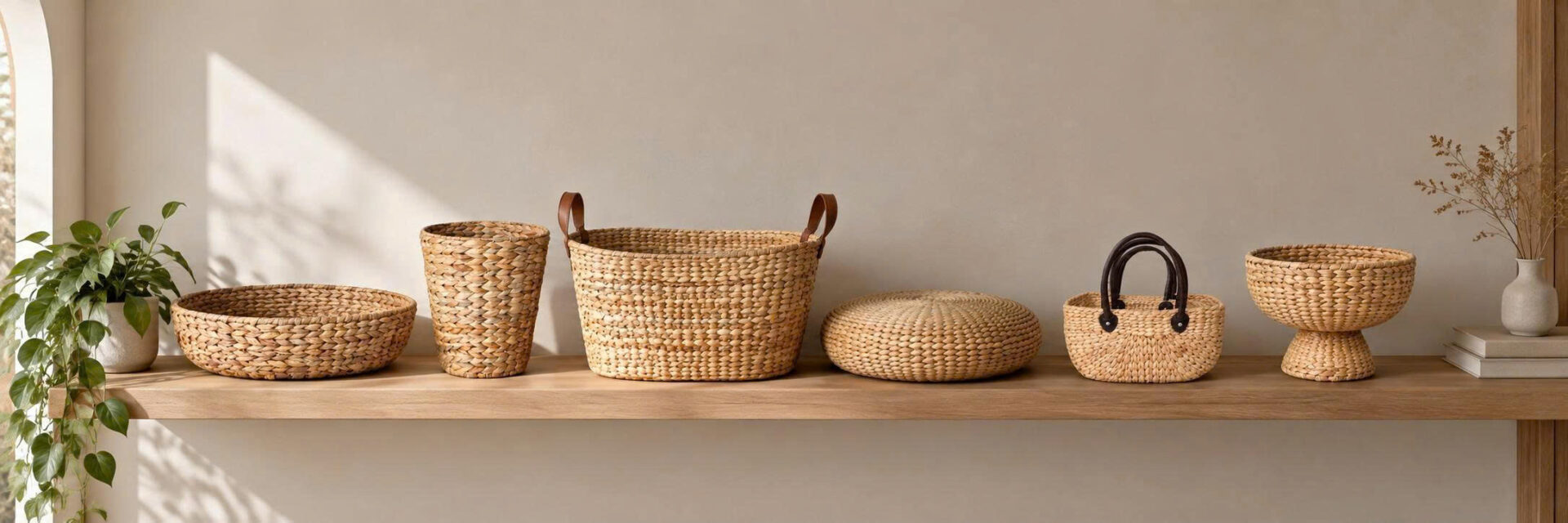
The harvesting and processing of water hyacinth fibers meets the standards for export-quality weaving.
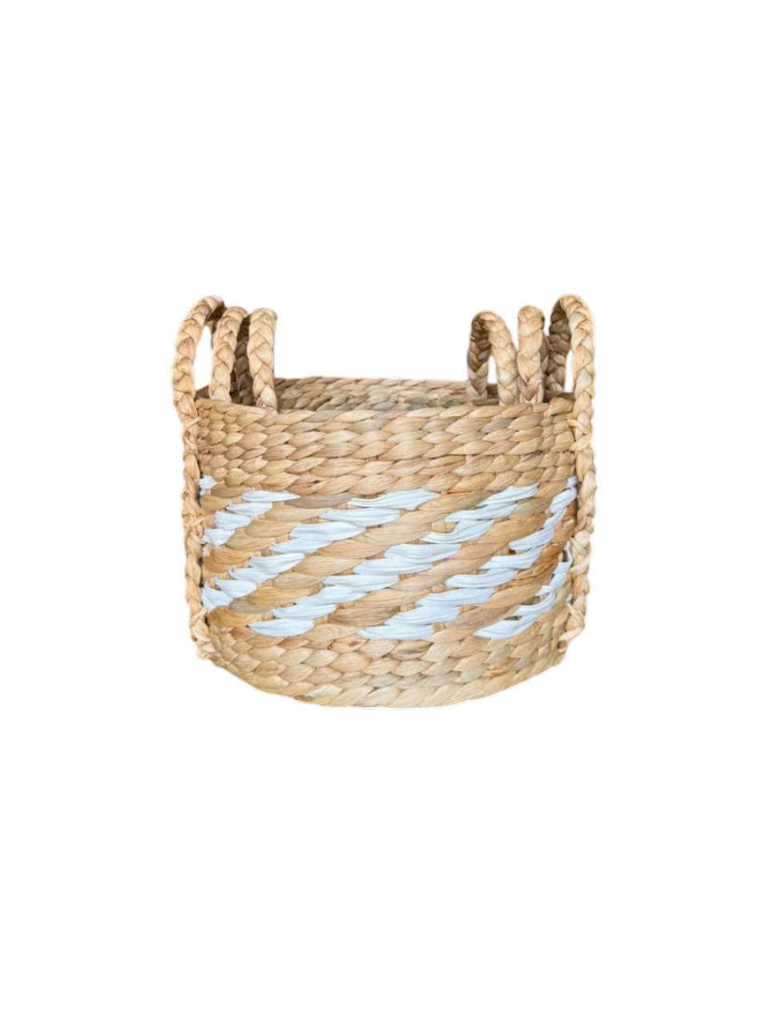
1. Exploiting natural water hyacinth on rivers and waterways in the Mekong Delta.
The water hyacinths selected for weaving must be mature plants, with stems ranging from 60cm to 90cm in length, straight, and free from pests, diseases, or damage. The water hyacinth cutters paddle their boats along the canals, using sickles to cut the stems close to the base, removing the green leaves and muddy roots, leaving only the succulent stems.
2. The natural sun-drying process achieves the ideal moisture level.
After being thoroughly washed, the water hyacinth stems are spread evenly on clean grassy areas or bamboo drying racks under direct sunlight. The natural sun-drying process lasts from 3 to 5 days of strong sunlight. Standard dried water hyacinth fibers will change from a vibrant green to a rustic yellowish-brown color, possessing high flexibility and not becoming brittle or breaking when bent.
3. Sterilization drying and sulfur fumigation to prevent mold.
To meet the strict phytosanitary standards of export markets, dried water hyacinth fibers are subjected to sulfur fumigation (sulfur drying) at permissible levels to completely eliminate insect eggs, termites, and mold spores. Next, the material is transferred to a heat drying chamber to stabilize the optimal moisture content at 12% – 14%.
4. Sorting and storing yarn
Finally, the bundles of water hyacinth fibers are carefully sorted by workers according to length (fibers longer than 70cm are used for weaving large baskets, while shorter fibers are used for weaving trays or creating patterns) and uniform color before being tightly bundled with straps and stored on elevated wooden pallets, awaiting delivery to the weaving artisans.